
About the Center for Disaster Healthcare Preparedness
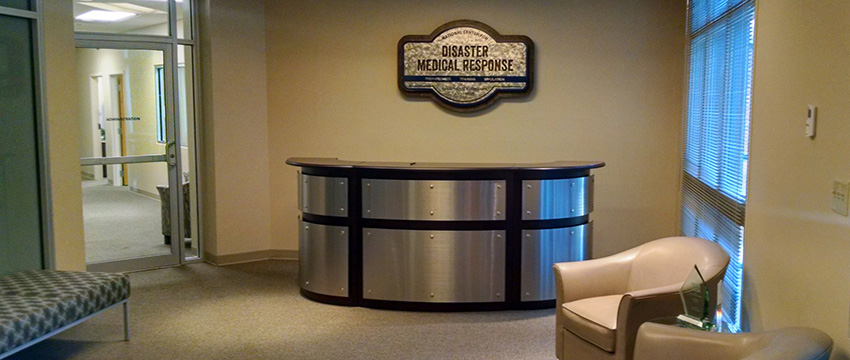
Since 2003, The Center for Disaster Healthcare Preparedness (CDHP), provides comprehensive disaster healthcare preparedness training for the State of Alabama. CDHP serves the training needs of Alabama’s Healthcare response system including Hospitals, Nursing Homes, Federally Qualified Healthcare Agencies, Rural Health Centers, other healthcare agencies and Healthcare Coalition partners throughout the state.
CDHP is funded by the Alabama Department of Public Health, Center for Emergency Preparedness, through a cooperative agreement from the Department of Health and Human Resources, Assistant Secretary for Preparedness.
Training is provided at no charge to Alabama healthcare professionals, healthcare coalition partners, emergency management professionals, volunteers, and public officials, and it provides free Continuing Medical Education. Healthcare providers outside of Alabama may attend training if space is available and are responsible for any expense associated with attending.
About CDHP
Following the 9/11 terrorist attacks, in 2002 Alabama received Federal funding to develop Bioterrorism Preparedness programs. CDHP, known then as the Office of Emerging Health Technologies (OEHT) was awarded a grant to conduct Bioterrorism Preparedness Table-Top Exercises in nearly 70% of the counties throughout the state.
Recognizing the vast emergency preparedness training needs of Alabama hospitals, OEHT expanded its mission to provide a centralized training center known as The Advanced Regional Response Center (ARRTC). ARRTC began by offering a comprehensive 3-day BASIC Course which included topics such as National Incident Management Systems (NIMS), Hospital Incident Command System (HICS), National Response Framework (NRF), Chemical and Radiological Clinical Awareness, Principles of Decontamination and Personal Protective Equipment and Rapid Assessment and Disaster Triage Methods.
In 2007, ARRTC launched a Road Show Course as an opportunity for Alabama healthcare providers and personnel to receive customized emergency preparedness training, based on the unique needs and educational preference of staff, onsite, at their facility. Road Shows made attendance easier, convenient, and more than doubled the number of students per year.
The tornado outbreak of April 2011 resulted in 250 fatalities in Alabama. Findings from the state After Action Report highlighted the desire and need among clinical staff impacted by the tornadoes for training specific to disaster related injuries. As a result, in 2012, ARRTC expanded it course offerings to include a one day, clinical disaster Simulation Course and skills labs, customized to meet the training needs and scope of various disciplines.
To further prepare the field of healthcare preparedness, in 2014, ARRTC added a fourth course, Healthcare Emergency Preparedness Professional (HEPP). HEPP is a 12-month online course designed to provide students with the knowledge, skills and capabilities to prepare and manage a healthcare facility’s Emergency Preparedness Program (EMP).
In 2016, ARRTC became a stand along center within the University of South Alabama’s College of Medicine, known as the Center Disaster Healthcare Preparedness (CDHP).
CDHP Staff Members
Jenni R. Guerry, Director-
As the Director of the Center for Disaster Healthcare Preparedness (CDHP) at the University of South Alabama, Jenni Guerry leads the strategic coordination and administrative oversight of the Alabama Healthcare Coalition (HCC) Coordination Program. With nearly twenty years of professional experience in emergency preparedness and management, she provides the executive leadership necessary to strengthen the state’s healthcare delivery system readiness.
In her role, Mrs. Guerry is responsible for the following core initiatives:
Strategic Oversight & Coordination: She oversees a comprehensive coordination program
for Alabama’s nine Healthcare Coalitions, ensuring that regional assessments, planning,
and exercises are integrated to enhance patient outcomes and continuity of care during
large-scale emergencies.
Gap Analysis & Readiness Tracking: She directs the implementation of ongoing assessments
designed to track planning accomplishments and identify preparedness gaps across the
state's healthcare response system, including hospitals, nursing homes, and emergency
management agencies.
Fiscal Management: She provides critical oversight of fiscal agent funds allocated
to advance healthcare readiness, assisting coalitions in prioritizing projects and
bridging resource gaps identified in jurisdictional work plans and budgets.
Training and Resource Strategy: Mrs. Guerry ensures the delivery of targeted, grant-funded
training programs to address identified response gaps, leveraging her background as
a certified instructor and Master’s Level Emergency Manager to maintain high standards
of competency for Alabama’s healthcare professionals.
Professional Leadership: Beyond her duties at the CDHP, she serves as the Chairperson
for the Institutions of Higher Education (IHE) Caucus within the Alabama Association
of Emergency Managers (AAEM), representing the interests of college officials in the
broader emergency management landscape.
Her career background includes significant service with the Alabama Department of
Public Health on the Emergency Preparedness and Radiological Emergency Response Teams,
providing her with a unique perspective on the intersection of public health and disaster
resilience. Under her direction, the CDHP continues to serve as a vital link between
state and federal programs and the local coalitions that protect Alabama's citizens
during crises.
Elizabeth Williams, M.P.H.
As the Senior Manager and Associate Director of Preparedness Training for the Center for Disaster Healthcare Preparedness (CDHP) at the University of South Alabama, Elizabeth Williams, M.P.H., provides essential leadership in the development and execution of specialized training for the Alabama Healthcare Coalition (HCC) initiative. With an emphasis on public health emergency support functions and regulatory compliance, she ensures that Alabama’s healthcare workforce is equipped with the clinical and operational skills required to navigate high-consequence disasters.
In her role, Mrs. Williams is responsible for the following core initiatives:
Specialized Training Development: She leads the development and statewide implementation
of the C.A.R.E. (Combatting Aggression through Response and Education) Training program.
This reality-based curriculum provides healthcare staff with a foundation to address
workplace violence, domestic aggression, and active shooter incidents within medical
settings.
Regulatory Compliance & Standards: She ensures that CDHP training programs align with
stringent regulatory and accreditation requirements, including those from CMS, The
Joint Commission, and OSHA. Her work focuses on bridging the gap between administrative
policy and the practical safety needs of frontline employees.
Coalition Coordination Support: Mrs. Williams serves as a primary subject matter expert
for the Alabama Healthcare Coalition Coordination Program. She facilitates regional
training sessions designed to enhance collaboration between diverse coalition members,
including hospitals, EMS, and emergency management.
High-Risk Event Preparedness: She manages the delivery of training for high-risk,
low-frequency events that cannot be effectively addressed through online modules,
ensuring that providers across the state’s nine HCCs can maintain a culture of safety
during critical encounters.
Crisis Standards of Care Development: She contributed her public health expertise
to the multi-disciplinary committee that established the Alabama Crisis Standards
of Care Guidelines, which provides the ethical and operational framework for allocating
scarce resources during catastrophic medical surges.
Public Health Integration: Leveraging her extensive background as a former H1N1 Coordinator
and Volunteer Coordinator (MRC/ESAR-VHP), she integrates public health surveillance
and emergency volunteer management into the broader coalition preparedness framework.
Mrs. Williams' career is marked by distinguished service with the Alabama Department
of Public Health, where she served as a Public Health Administrator for various statewide
programs, including Tobacco Control, Safe Kids, and the Breast and Cervical Cancer
Early Detection Program. Her deep institutional knowledge of Alabama's public health
system makes her a vital asset in the ongoing mission to build a resilient healthcare
delivery network across the state.