
Cancer Biology Track
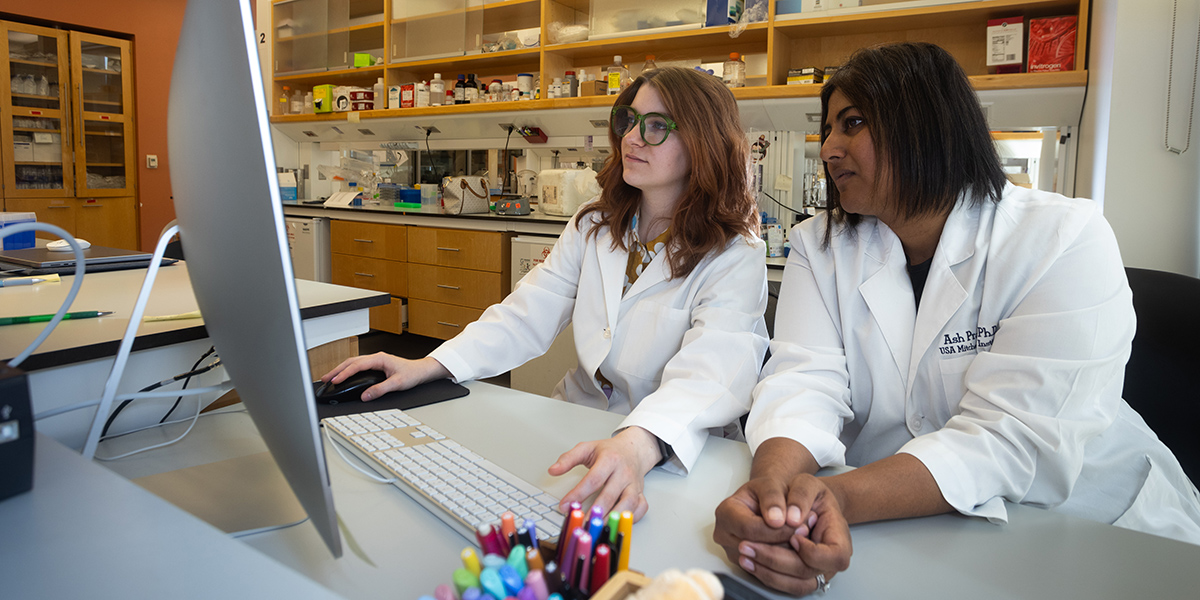
Director: Chandrani Sarkar, Ph.D., Department of Biochemistry and Molecular Biology, Department of Pathology / USA Health Mitchell Cancer Institute
The Cancer Biology Track focuses on elucidating the fundamental processes and complexities of cancer biology, spanning various disciplines such as chemistry, DNA repair, health disparities, metabolomics, proteomics, tumor microenvironment, metastases, immunology, and cancer neurogenesis. With multidisciplinary approaches, we aim to uncover innovative strategies for cancer prevention, diagnosis, and treatment.
The endeavors of our faculty encompass a wide array of cancers, including brain, breast, cervical, colorectal, endometrial, lung, ovarian, prostate, and pancreatic cancers. By investigating these diverse cancer types, we strive to unravel their unique molecular signatures, pathogenic mechanisms, and therapeutic vulnerabilities, with the ultimate goal of improving patient outcomes and addressing the global burden of cancer.
Advanced coursework
- IDL 560 – Cancer Biology (3 credits)
- IDL 566 – Topics in Cancer Biology (1 credit)
- IDL 667 – Current Cancer Research in Progress (CCRIP; 1 credit)
- CR 730 – Advanced Cancer Biology (3 credits)
- IDL 640 – Statistics (2 credits)
- IDL 641 – Grant writing (1 credit)
Student Spotlight
 Magan Pittman
Hometown: Monroeville, AL
Undergraduate education: B.S. in biomedical sciences with a concentration in biotechnology, University of
South Alabama
Research focus: Cancer biology; DNA repair
Faculty mentor: Aishwarya Prakash, Ph.D.
“I chose to join Dr. Prakash's lab because my favorite area of study is biochemistry/molecular
biology, and my lab mates and mentor are incredible scientists and people!”
Faculty Research Spotlights
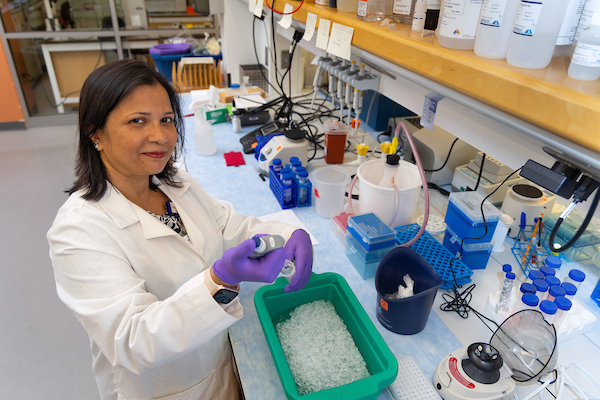 Chandrani Sarkar, Ph.D.
Associate Professor, Department of Biochemistry and Molecular Biology, Department
of Pathology / USA Health Mitchell Cancer Institute
Research interest: My research focuses on investigating the role of neuromediators in modulating the microenvironment during metastatic cancer progression. I am interested in understanding the molecular mechanisms that modify the tumor microenvironment, thereby leading to tumor progression and recurrence, and using this knowledge to develop treatment strategies. Currently my lab is studying the role of neuropeptide Y (NPY) in regulating the growth and progression of colon cancer. Other research interests include understanding the role of neuromediators in the process of wound healing.
Techniques used: Some of the techniques that we regularly use for our studies include orthotopic and subcutaneous tumor transplantation in mice, real-time PCR, Western blot analysis, immunohistochemistry, immunocytochemistry, flow cytometry, in vitro cell culture assays and ELISA.