
Infectious Disease and Host Defense Track
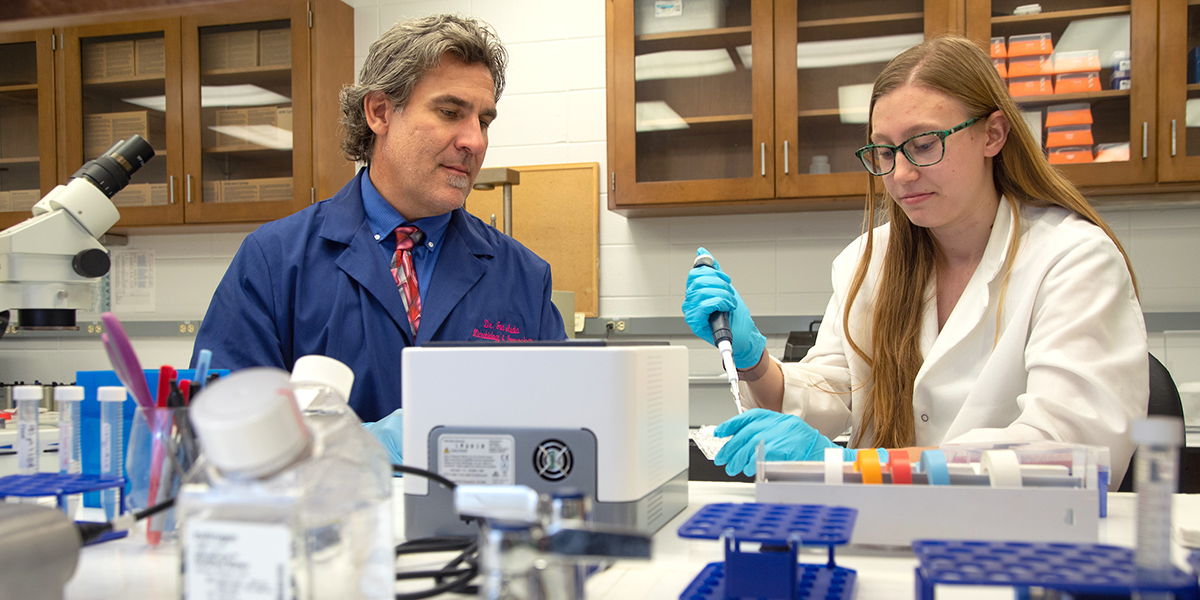
Director: Meghan Hermance, Ph.D., Associate Professor of Microbiology & Immunology
Infectious diseases continue to profoundly impact global health, with new pathogens regularly emerging and previously controlled infections resurging. The Infectious Disease and Host Defense (IDHD) track offers an exciting, multidisciplinary Ph.D. training experience at the forefront of this critical field.
Our program addresses urgent challenges including the rise of antibiotic-resistant bacteria, emerging zoonotic threats, increased pathogen transmission through arthropod vectors, immune and inflammatory disorders, and significant gaps in effective diagnostics, therapeutics, and vaccines. By joining the IDHD track, students will collaborate with leading researchers across microbiology, immunology, cell biology, and vector biology, gaining comprehensive skills needed to tackle complex infectious disease and immune-related problems. Upon graduation, IDHD track students will be prepared to take on leadership roles in academic, government, and industrial research settings.
Students in the IDHD track benefit from:
- Cutting-edge research exploring pathogen biology, host immune responses, and novel therapeutic strategies.
- Hands-on training using state-of-the-art facilities and innovative technologies.
- Personalized mentorship from internationally recognized experts.
- Opportunities for interdisciplinary collaborations and professional development.
Prepare yourself to become a leader in infectious disease research, contributing essential discoveries to improve human health worldwide. Explore how the IDHD graduate track can empower you to make a lasting impact.
Highlights of the IDHD track
Advanced Vector Biology Research:
- Conduct cutting-edge studies of viral and bacterial pathogens within our state-of-the-art biosafety level 3 (BSL-3) facility. Pathogens of interest include vector-borne obligate intracellular Rickettsia species and Powassan virus.
- Explore critical questions related to pathogen transmission dynamics and host-pathogen interactions, positioning yourself at the forefront of vector biology.
Innate Immunity and Inflammation:
- Engage in pioneering research on host immune responses and inflammatory pathways activated by critical Gram-negative pathogens, such as Pseudomonas aeruginosa and uropathogenic Escherichia coli.
- Investigate the novel and emerging role of amyloid precursor protein and amyloid-beta in innate immunity, infection control, and the complex pathophysiology of sepsis.
Student Spotlight
 Oluwagbenro Adesunloro
Investigating the Role of Amyloid-Beta in Pyelonephritis and Urosepsis
Faculty mentor: Allyson E. Shea, Ph.D.
Oluwagbenro Adesunloro chose the University of South Alabama for its strong interdisciplinary approach to biomedical research and its commitment to innovation in infectious disease and immunology. He said the program aligns with his interest in host-pathogen interactions and offers exceptional mentorship and research opportunities.
Adesunloro’s research, conducted under faculty mentor Allyson Shea, Ph.D., centers on understanding the pathogenesis of urinary tract infections (UTIs), with a specific focus on bacterial persistence, host-pathogen interactions, and antimicrobial evasion mechanisms.
“The primary model organism we study is the uropathogenic Escherichia coli (UPEC), the leading cause of UTIs. My project specifically explores the role of Amyloid-Beta (Aβ) as an antimicrobial peptide during urinary tract infections,” he explained. “I aim to uncover how Aβ interacts with UPEC and contributes to innate immunity using murine models, bacterial genetics, and molecular biology techniques. This research has potential implications for new therapeutic strategies against UPEC.”
Adesunloro said he enjoys the collaborative and supportive environment of the BMS program and appreciates the university’s welcoming environment for students from diverse backgrounds. “The diversity of research topics fosters interdisciplinary learning, and the faculty are deeply committed to student success,” he said. “The hands-on training, combined with strong mentorship and peer support, makes it a truly enriching experience.”
“The beautiful beaches and relaxed atmosphere around Mobile provide a great balance to academic life,” he added.
After earning his Ph.D., Adesunloro plans to pursue a postdoctoral fellowship and eventually become an academic researcher. “I am passionate about advancing infectious disease research and mentoring future scientists to make meaningful contributions to global health,” he said.
Faculty Research Spotlights
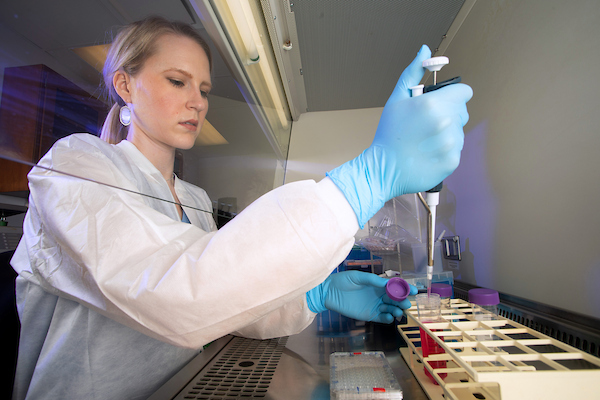 Meghan Hermance, Ph.D.
Understanding How Powassan Virus Spreads Between Tick Species
Ticks can spread many pathogens to humans, including Powassan virus (POWV), which can cause serious brain infections. Our research explores how POWV can move between two types of ticks: the native North American tick (Ixodes scapularis) and an invasive species from East Asia (Haemaphysalis longicornis). We discovered that POWV can spread directly between these ticks even when they feed close together on animals that aren't infected in the bloodstream. This method of transmission, known as co-feeding, could explain how POWV persists in nature even without clear animal hosts serving as reservoirs. Our findings help us better understand disease ecology and could improve tick control and disease prevention efforts.
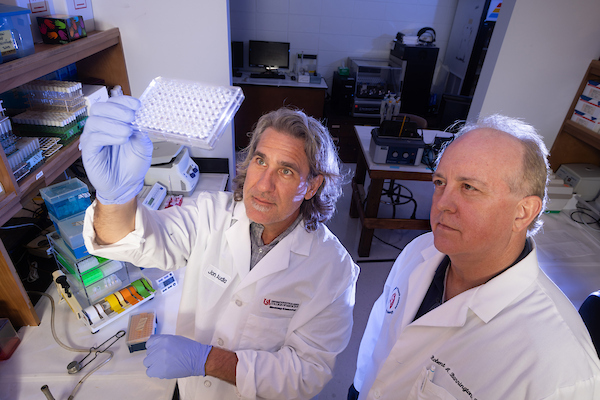 Jonathon P. Audia, Ph.D.
Investigating How Immune Responses in the Lung Control Severe Infection
Our lab studies how lung cells protect against severe bacterial infections. We focus on how certain inflammatory proteins called inflammasomes and caspases detect bacteria and alert the immune system. Specifically, we study a bacterium called Pseudomonas aeruginosa, which often infects hospitals and can be deadly for patients. Our research discovered that mice lacking certain inflammasome components actually had less severe lung infections and fewer harmful inflammatory responses. By exploring how inflammasomes influence immune responses and infection severity, we aim to uncover better ways to treat or prevent dangerous respiratory infections.